

Exhibitor Spotlight: Path Robotics—Physical AI for Manufacturing
Path Robotics Spotlight Featured Image

About Path Robotics

Path Robotics builds physical AI for manufacturing, starting with its welding model, Obsidian­™. Path’s intelligent welding cells perform the complex, variable welds that traditional automation cannot, enabling manufacturers to overcome chronic labor shortages while increasing production capacity and improving quality. Since its founding, the company has raised more than $300 million to incorporate intelligence through physical AI into legacy manufacturing processes, turning traditionally impossible-to-automate work into reliable, high-throughput, and high-quality production. By combining artificial intelligence, machine learning, and computer vision, Path Robotics’ physical AI enables legacy manufacturing processes to see, think, and adapt, in real time, turning the complexity that made automating these traditional processes impossible into a reality.

By combining artificial intelligence, machine learning, and computer vision, Path Robotics’ physical AI enables legacy manufacturing processes to see, think, and adapt, in real time, turning the complexity that made automating these traditional processes impossible into a reality.

Path Robotics’ customers in the maritime and shipbuilding space include companies like Saronic and Huntington Ingalls Industries (HII), who are also exhibiting at the show. 

What to Expect at the Path Robotics Booth

Stop by the Path Robotics booth (Terrace — T76) to see physical AI in action, including multiple embodiments of physical AI for shipbuilding and real parts welded by AI. Path Robotics will also have a new product on display, set to be announced publicly on April 16.

Attendees can also find one of Path Robotics’ robot arms in the Huntington Ingalls Industries (HII) booth (Prince George’s Exhibition Hall A-E — 923).

The Challenge: Welding in Unpredictable Environments

Obsidian™ is Path Robotics’ physical AI model for welding — a real-time perception and decision-making system that enables robots to see, understand, and adapt as a skilled welder would.

This is especially critical in environments like shipbuilding, where no two parts are identical. Fit-up varies, joints shift, and heat distortion changes conditions mid-weld. Traditional automation breaks in these conditions because it relies on pre-programmed paths and near-perfect consistency.

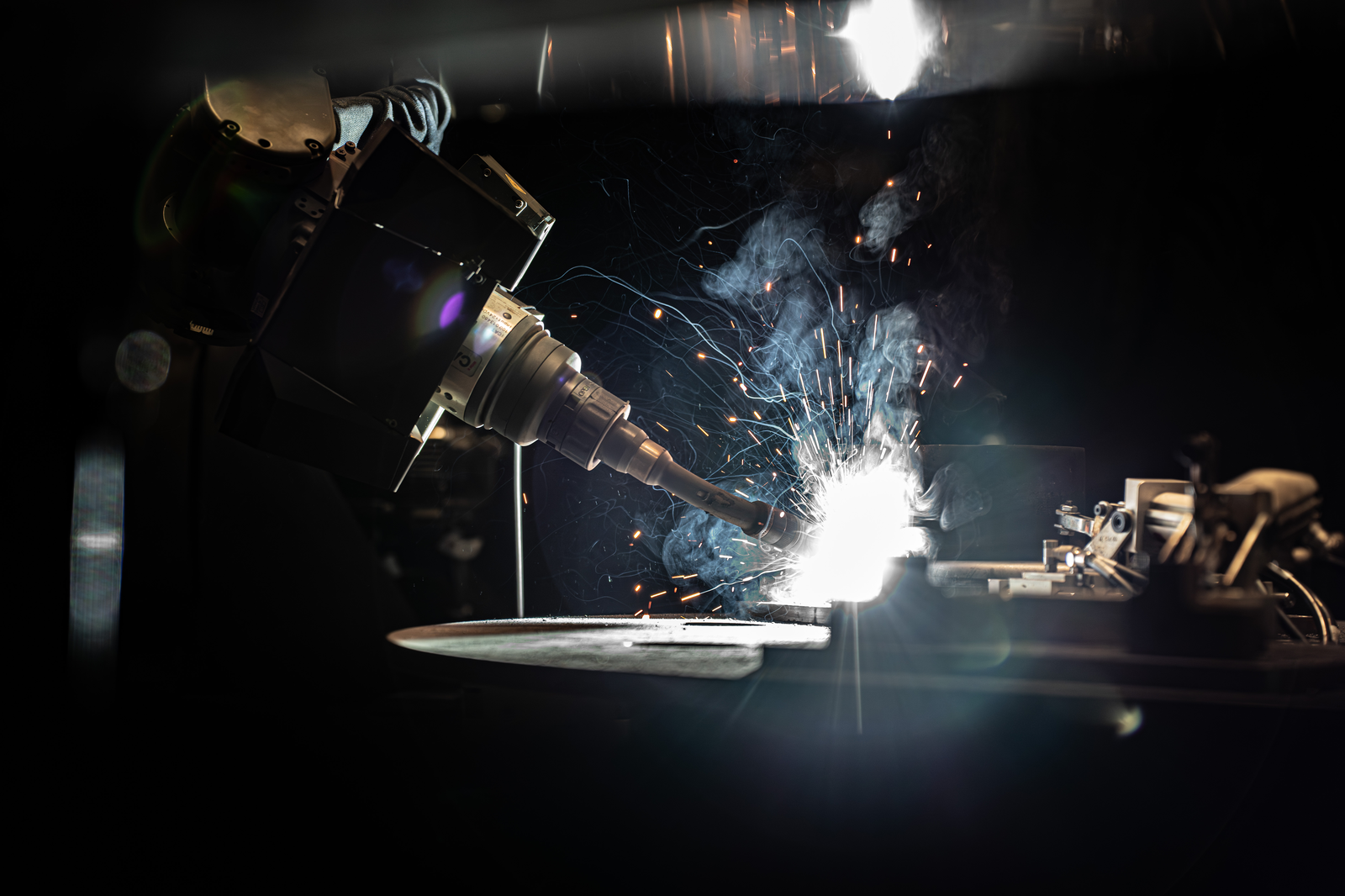
Obsidian changes that model entirely. Using proprietary vision systems with advanced lasers and optics, it scans each weld seam as it actually exists, generates a weld plan in real time, and continuously adjusts during execution. The result is consistent, high-quality welds in environments that have historically resisted automation — unlocking capacity in industries like shipbuilding where variability is the norm, not the exception.
 

Path Robotics Welding

Key Capabilities: Intelligence at the Point of Weld

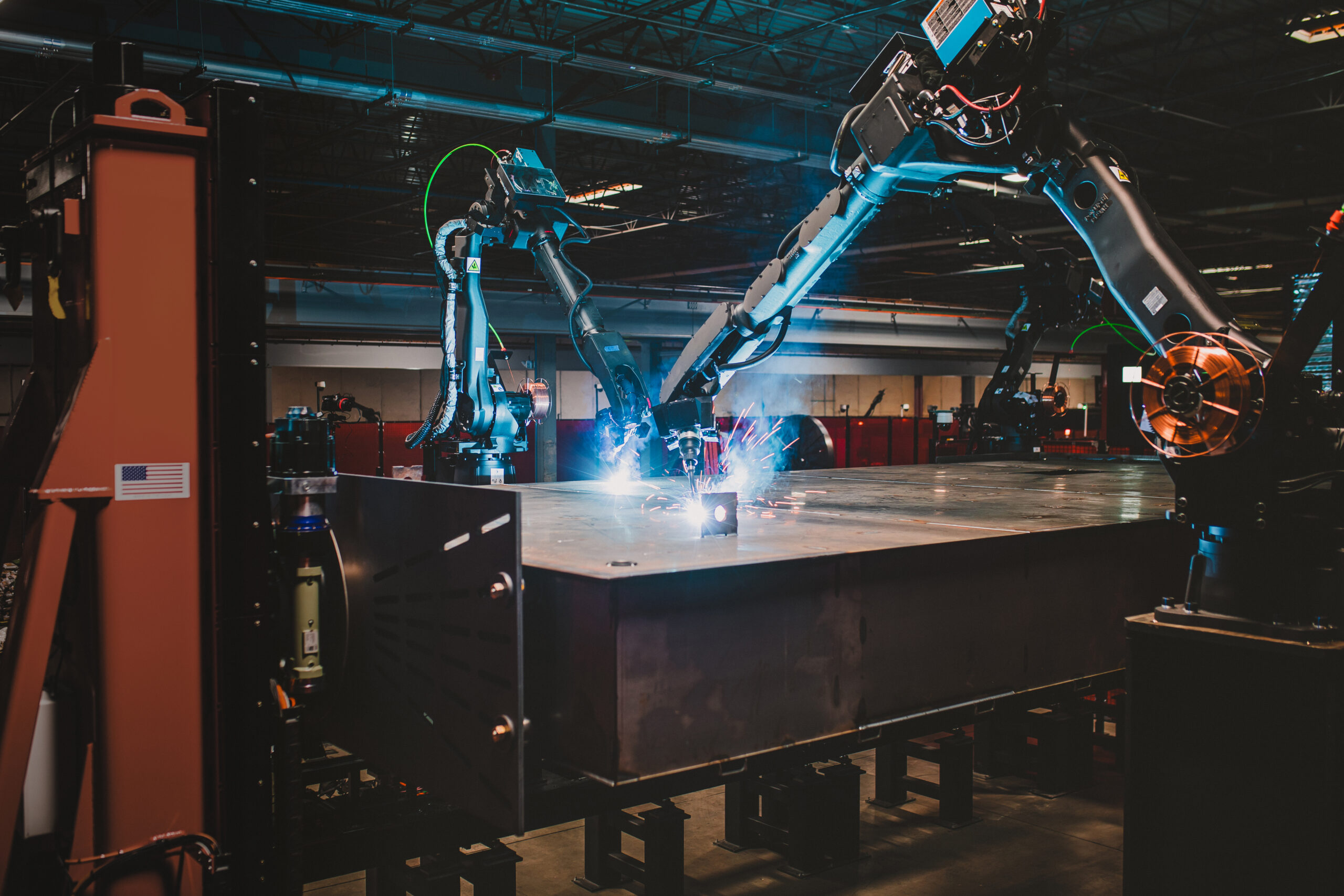
Obsidian transforms robotic welding from a rigid, repeat-only process into an adaptive, intelligent system. Trained on tens of millions of inches of real-world weld data, it enables robots to operate with the judgment and responsiveness of experienced welders.

This matters most in sectors like shipbuilding and defense manufacturing, where large-scale assemblies and dynamic conditions make traditional automation impractical. Obsidian’s ability to perceive and respond in real time eliminates the need for extensive reprogramming or perfect fixturing — two of the biggest barriers to automation in shipyards.

Each deployment also contributes new production data, creating a feedback loop that continuously improves performance across the entire fleet. Over time, this compounds into higher throughput, better weld quality, and more resilient production systems — critical for industries under pressure to scale quickly.
 

Path Robotics Welding

What Sets Path Robotics Apart

For decades, robotic welding has required highly controlled environments — identical parts, precise fixturing, and extensive upfront programming. That model breaks down in shipbuilding, where variability is constant and production conditions evolve in real time.

Path Robotics introduces a fundamentally different approach: embedding intelligence directly into the welding process. Instead of following a fixed program, the system perceives actual conditions, reasons about what it sees, and adapts instantly.

This shift enables automation in environments that were previously considered too complex – from large-scale ship assemblies to distributed manufacturing settings. It also reduces reliance on scarce skilled labor while augmenting experienced welders, allowing them to focus on the most complex work while AI handles the rest.

Crucially, the system improves over time. Every weld contributes data back into the model, increasing performance and reliability – a key requirement in high-stakes environments like shipbuilding, where failures carry significant cost and schedule impact.

New Product Announcement: April 16

Path Robotics will unveil a significant new product on April 16, designed to expand the reach of intelligent welding into environments where fixed automation has historically fallen short. The product unlocks some exciting new applications in industries like shipbuilding – bringing intelligent welding to the part rather than the part to the workpiece.

Who Should Visit Path Robotics

Manufacturers such as shipbuilders, defense contractors, program managers, and engineering leaders who want to learn more about how Path Robotics’ welding automation can increase manufacturing throughput and quality.

Connect With Path Robotics